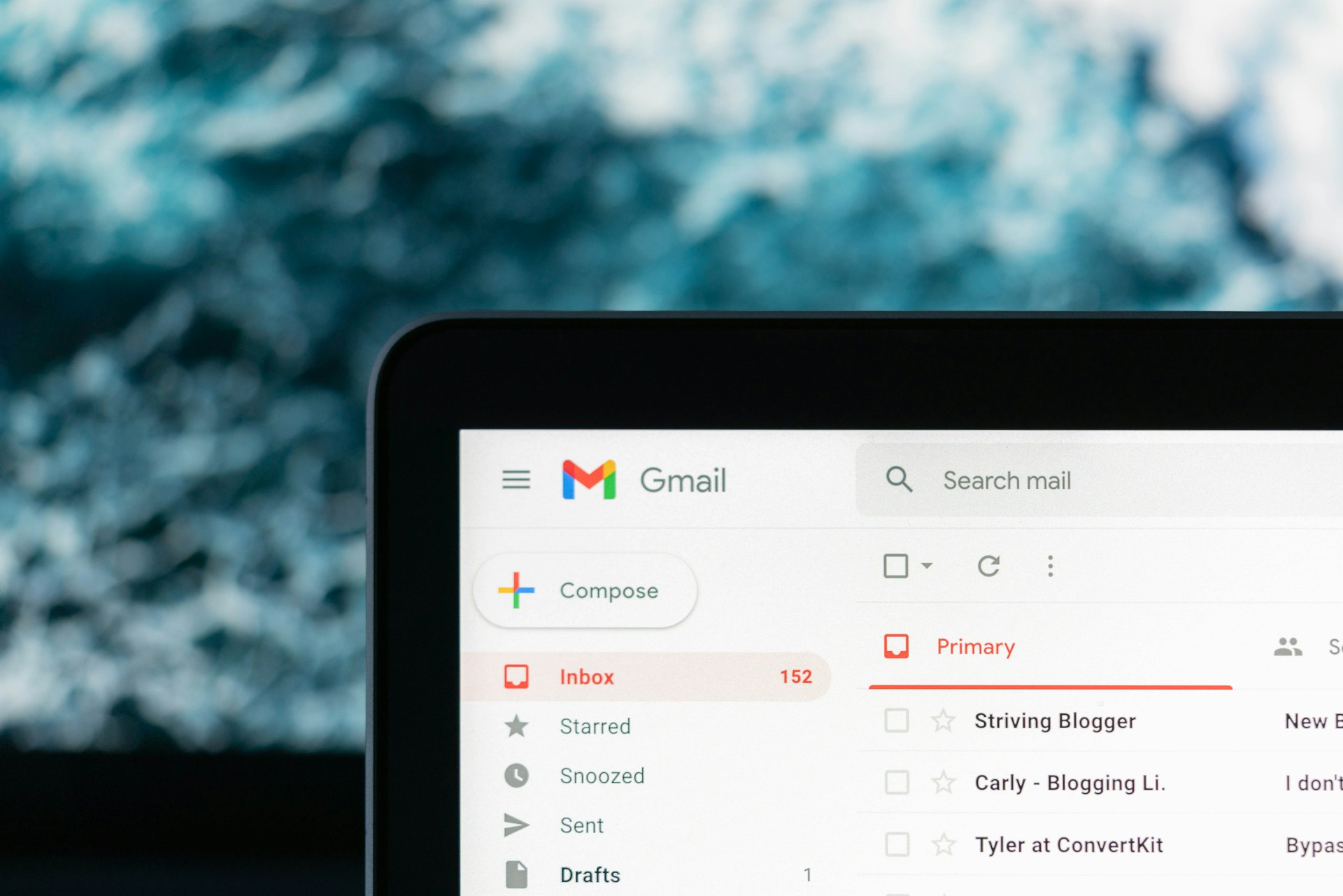
Software-as-a-service (SaaS) hosted security providers, including integrated cloud email security (ICES) solutions, offer faster and more optimal solutions to help stop malicious emails. Organizations wanting to ramp up additional email protection services to augment their current solution will find a SaaS-based offering very appealing, especially with the increased risk of cyber threats.

Trustifi, a global leader in cloud-based email protection solutions powered by advanced AI, helps stop malicious emails, phishing attacks, and other email-based attacks, including business email compromise (BEC). This market-leading software from Trustifi delivers several protection layers that are fully integrated into a single management console. These features become enabled at the client’s discretion.
Key Challenges and Solutions in Email Security

Email is the most common communication method and one of the targeted attack surfaces. Phishing attacks, spam, malware, ransomware, account takeover, business email compromise (BEC), and identity theft happen daily through the email channel.
Organizations looking to upgrade their current email solution to a SaaS-based advanced solution must ensure this new platform has a solid track record in preventing email attacks. It is important not to underestimate the ease of use of these platforms to help stop Human error and misconfiguration.
Features of Top Email Security SaaS Platforms
Cloud-based email security solutions continue strengthening with new features and enhancements to existing functions. Platforms like Trustifi continuously monitor the threat landscape for malicious activity, SaaS security risks, and additions to the regulatory compliance mandates. Trustifi’s security operations (SecOps) teams continue to update the various policies for data loss protection (DLP), processing additional telemetry within their large Language Mode (LLM) for AI and ML, and provide updated content for their security awareness and attack simulation module.

- AI-enabled Inbound email filtering
- Outbound AI-filtering (DLP) integrated with email encryption and data tokenization protection.
- Account takeover prevention
- Support for multi-factor authentication (MFA) for messaging access
- AI-powered security awareness and attack simulation capabilities
- Email archiving and eDiscovery tools
- Email Managed Detection and Response (EMDR) offering
Deployment and Integration
Deployment
They are enabling SaaS-based email protection with advanced threat detection capabilities that require tiny steps to help.
All cloud-based email solutions should support the following deployment options:
- MX record change
- Email Relay
- API
- SmartHost
Integration
Integrating cloud-based email security solutions with other third-party security solutions is essential. These integrations are critical to the overall email security deployment configuration, reducing cyber risks and enhancing the email security strategy.
These integrations include:
- Connections into a Zero-trust for authentication and network segmentation
- Connections to MFA providers like OKTA are for email authentication.
- Seamless connections into Google Workspace and Microsoft 365
- Connections into BitDefender for Additional Protection against spam campaigns.
Cost-Effectiveness of SaaS Email Security
All SaaS-based email security solutions charge their clients based on the subscription licensing. Most email security providers charge based on the number of email accounts, Office 365 Google Workstation users, or Active Directory users.
One area of separation between the various providers is the subscription based on the module. Some email security providers create basic packages, loss prevention bundles, security awareness bundles, and some charge for email archiving.
Every initial license offering includes phishing protection, email encryption, DLP, advanced malware protection, and domain-based message authentication(DMAC) protection.
Trustifi prices the solution to fit in line with the small-to-medium and mid-enterprise. With a single license per user, the grants access to the entire portfolio, including many advanced tools including:
Our tool will then meticulously analyze the provided data, extracting valuable insights from the mail header and other relevant components. The email header analysis will include, for example, a breakdown of the message ID, enabling you to track the email’s journey, destination, and return path and shed light on potential routing issues.
The URL Defanger tool allows you to share suspicious or potentially malicious links securely with your email security appliance or support/security teams. By defanging the URLs, you bypass spam and reputation-based filters that could otherwise block or quarantine these links. This allows the support or security teams to receive the link and conduct investigations, ensuring the identification and resolution of any security threats.
The SPF record checker includes a record name, an MX record list of IP addresses, and the SPF domain. SPF lookup checks for syntax errors, policy configurations, security risks, and allowed IP addresses for mail servers.
Customer Perspectives and Case Studies
Email security solutions vary in the marketplace depending on the provider. Many providers still deploy virtual appliances for on-premise and hybrid cloud strategies. Some email security providers still classify themselves as secure email gateways (SEG). ICES service providers focus their efforts on being 100% in the cloud.
SMB and mid-enterprise customers prefer a consolidated offering to simplify their SecOps and lower their subscription costs. Large enterprises and government agencies look for a broader range of solutions where email security is a core component of the overall architecture.
Trustifi’s success in the SMB and mid-enterprise marketplace reflects its customer success stories.
Case Study 1: The Iowa State Bar Association

Founded:
The Iowa State Bar Association can claim to be the oldest voluntary state bar association in the United States. It established itself in 1874, four years before the American Bar Association. That year, Iowa had been a state for 28 years with a population of 1.5 million.
Problem Statement
Before using Trustifi, an ISBA attorney became the victim of a man-in-the-middle (MITM) attack. During the attack, the cybercriminal impersonated the attorney and hijacked his email account to wire $400,000 illegally. The ISBA never recovered the funds. The ISBA was keenly aware of the dangers of business email compromise, and that email was now a primary attack vector.
Solution
“Our attorneys span four generations. Finding an email security solution that was accessible to all was paramount in our decision. Trustifi was the easiest and most trustworthy, being the first federally accepted method of sending legal documents.”
Harry Shipley
Assistant Executive Director of the ISBA
Result
“Iowa Attorneys Side With Security Initially, many attorneys hesitated to implement Trustifi. The feedback is overwhelmingly positive now that we have a significant adoption rate. Trustifi has swayed even our seasoned attorneys who have gone their careers without email security because they considered it unnecessary.”
Harry Shipley
Assistant Executive Director of the ISBA
Case Study 2: Peju Winery

Founded
Named “BEST WINERY IN North American” by the Discoverer Blog, PEJU Winery began with Tony Peju daring to sell wines in an informal facility: the garage at their vineyard estate in Rutherford, Napa Valley. A lengthy legal battle ensued, and Peju persisted: this became the catalyst for Napa County to create the legal definition of a winery, which was adopted in 1991. It is no wonder Tony is called “The Father of Custom Crush. “
Problem Statement
“Enough is enough. Even with Mimecast becoming fully deployed, stuff still kept getting through. The time to get to emails released from quarantine affected the users and my productivity beyond measurement.”
Chad Culbreth
IT Manager of Peju Winery, Napa Valley, California
Solution
“Trustifi uses their personnel to handle all onboarding and support. Their US-based call center delivers exceptional support and helps resolve issues within minutes. Previous email security providers would place blame on their outsourced onboarding teams for their problems with the solution not working as expected.”
Chad Culbreth
IT Manager of Peju Winery, Napa Valley, California
Result
“Trustifi is unmatched in the email security space. It is simple to deploy, fast onboarding and user adoption, and at an exceptional price point to meet organizations challenged with budget restraints.”
Chad Culbreth
IT Manager of Peju Winery, Napa Valley, California
Case Study 3: Roche Bros. Supermarkets

Founded
Family-owned-and-operated Roche Bros. Supermarkets have nurtured a tradition of the community since 1952.
Problem Statement
Previously, Roche Bros. leveraged tools from Microsoft to run simulated phishing attacks to test their internal users and see how many clicks on these test messages. An alarming number of users did click on the “test phish” email. The current solution, Area One/CloudFlare, allowed many phishing emails to enter the 600 corporate email boxes, causing great concern across the entire organization.
Roche Bros. needed to address the need for a better way to encrypt all email communications with a much easier workflow.
Solution
Trustifi exceeded Roche Bros’ expectations by delivering an easy way for end-users to send encrypted messages and a secure method for their suppliers to decrypt the email safely. With the same platform, Trustifi delivers exceptional anti-virus, anti-malware, and anti-phishing protection fully integrated with the email encryption solution and data loss prevention.
Result
“By leveraging Trustifi’s platform consolidation strategy, Roche Bros. reduced the number of adaptive security controls and simplified the management of their email security strategy at a much lower cost point.”
John Haddigan
Vice President of Information Technology at Roche Bros. Supermarkets
Future Trends in SaaS Email Security
SaaS-based email security solutions will continue to innovate to address the constant changes in the global threat landscape. Cybersecurity personnel also need to adjust to the evolution of these tools.
SaaS-based appliances purposely restrict visibility access to their hosted applications. This reality often frustrates security engineers who are concerned about the platform’s risk of becoming compromised. Another challenge is that SaaS applications have many options for organizations to configure. This statement holds for hosted email security platforms.
Hosted email security platforms like Trustifi extend several protection layers within their management console. Clients ultimately decide which features they wish to enable. This value-added function requires the organization to update its various deployment documentation.
SaaS-based security applications often rely on third-party connectors to enhance their platform offerings. Security teams must increase their visibility in these various connectors to ensure the organization avoids vulnerabilities and exploits.
Choosing the Right SaaS Email Security Provider
Choosing the right SaaS-based email security platform starts with your organization’s compliance, business, and cybersecurity protection objectives. Many platforms offer expensive features that may be outside your overall strategy.
Selecting a platform begins with the following questions:
- What are the various compliance and regulatory mandates your organization handles?
- What email security controls are required for your organization to maintain its cyber insurance?
- Are you planning to add subsidiaries this year?
- Are you required to encrypt all outbound email messages?
- What reporting requirements do you have internally and externally?
- Do you seek to consolidate current standalone security devices into a more unified management console?
- Do you have enough SecOps resources, or are you looking for managed security service offerings?
The answer to these questions will help your organization narrow down which email security solutions align with your strategy. You can also lower your costs by only subscribing to a platform that delivers the right adaptive controls for your organization.
Conclusion and Next Steps
After deciding which platform to use, the next step is enabling cloud-based email security, which will not disrupt your current mail flow. As you complete enabling the new email solution, your organization can sunset the existing solution and allow additional features to meet your goals.
Why Trustifi?
Trustifi’s experience delivering excellent expertise with its advanced AI cloud-based email security platform continues as more organizations move away from legacy solutions. Built from day one as a cloud-based SaaS offering, Trustifi understands its clients’ compliance, regulatory, And cost requirements. Each module within Trustifi aligns with every business sector regardless of the organization’s size.
Get Started With Trustifi Today – Easy, Affordable, and Comprehensive
Whether you are looking for an extra layer of protection in your existing email environment or a full-suite solution, the expertise and simplicity Trustifi offers will exceed your expectations. Let’s discuss pricing and a customized email security plan for you.