Regulations change fast, and your compliance strategy has to keep up to avoid catastrophic penalties. Managing regulatory frameworks manually is a losing battle as daily operational communication volumes continuously climb. The stakes for your organization are undeniably high, with regulatory fines, failed audits, and severe data breaches threatening your operational stability.
However, you can eliminate this heavy administrative burden by implementing robust email security and advanced automation. Compliance is no longer just an IT issue; it directly impacts executive liability and brand reputation in the market.
When organizations fail to secure their sensitive data, hard-earned customer trust evaporates instantly. This guide delivers a clear, practical evaluation framework for choosing a solution that protects your organization without slowing it down.
Why Does Email Compliance Need Automation?
Email compliance is no longer a once-a-year audit exercise. It is a continuous, real-time operational requirement. Organizations must shift away from manual oversight to protect themselves effectively. Four key drivers make this transition essential:
- Scale problem: Email volume has made manual review statistically impossible. No team can read, flag, and document every message effectively.
- Regulatory complexity: Frameworks like the Health Insurance Portability and Accountability Act (HIPAA), Financial Industry Regulatory Authority (FINRA) rules, Securities and Exchange Commission Rule 17a-4 (SEC 17a-4), and the Sarbanes–Oxley Act (SOX) carry specific requirements. These documented rules must be enforced consistently across all communications.
- Human error exposure: Manual processes naturally introduce inconsistency. This is exactly what regulators look for during strict examinations.
- Expanded attack surface: Remote work environments create more endpoints and email activity outside the traditional security perimeter.
Ultimately, software automation functions as essential organizational liability protection. It is far more than just a simple departmental efficiency gain. You must prioritize proactive measures to prevent phishing and secure your digital communications globally.
| Key Insight: Shifting from reactive audits to proactive software defenses shields your enterprise from steep regulatory fines and unexpected data breaches as communication channels multiply. |
5 Unusual Core Features For Compliance Evaluation
Evaluating software requires looking past the marketing sheet to understand true functionality. Use this practical buyer’s checklist to assess capabilities before making a final purchasing decision.
You need powerful tools that work seamlessly with your daily operational workflows.
1. Automated Policy Enforcement Rules
Solutions should apply rules automatically based on content type, data sensitivity, or regulatory context. Policy logic must be flexible enough to reflect your specific operational requirements. You should never need professional services for every minor platform update. Standard platforms leverage AI-powered systems to adapt immediately to evolving environments.
2. Real-time Monitoring Alerts
Batch processing platforms review email activity with a severe delay. This leaves your organization highly exposed between manual review cycles. Look for continuous monitoring that flags policy violations the exact moment they occur. Instant administrative alerts empower your team to respond effectively before minor issues escalate.
3. Audit Trails And Archiving
Every platform must maintain a tamper-evident, highly searchable record of activity. Secure archiving must retain data precisely for industry-mandated timeframes. For instance, firms licensed by FINRA must retain all business-related email messages for not less than three years. Verify that your archived data remains highly exportable for immediate legal review.
4. Advanced Data Loss Prevention
Data loss prevention must automatically detect and block outbound sensitive emails. This critical policy enforcement should happen silently without active sender intervention.
For organizations in regulated sectors such as banking and investment services, these safeguards play a key role in preventing insider data leaks via email. Teams evaluating tooling can compare the leading encryption options for financial services alongside their compliance automation shortlist. Look for granular rule customization to avoid frustrating generic false positives.
5. One Click Secure Integrations
Email protection only benefits your organization if employees actually use it. You must seek out solutions where users can encrypt email with a single action.
Prioritize versatile platforms that integrate natively with existing workspaces without demanding infrastructure overhauls.
| Pro Tip: Prioritize seamless integration and usability when evaluating features. Even the most secure Data Loss Prevention (DLP) tool will fail if it creates workflow friction that employees actively try to bypass. |
The Best Email Compliance Automation Solution
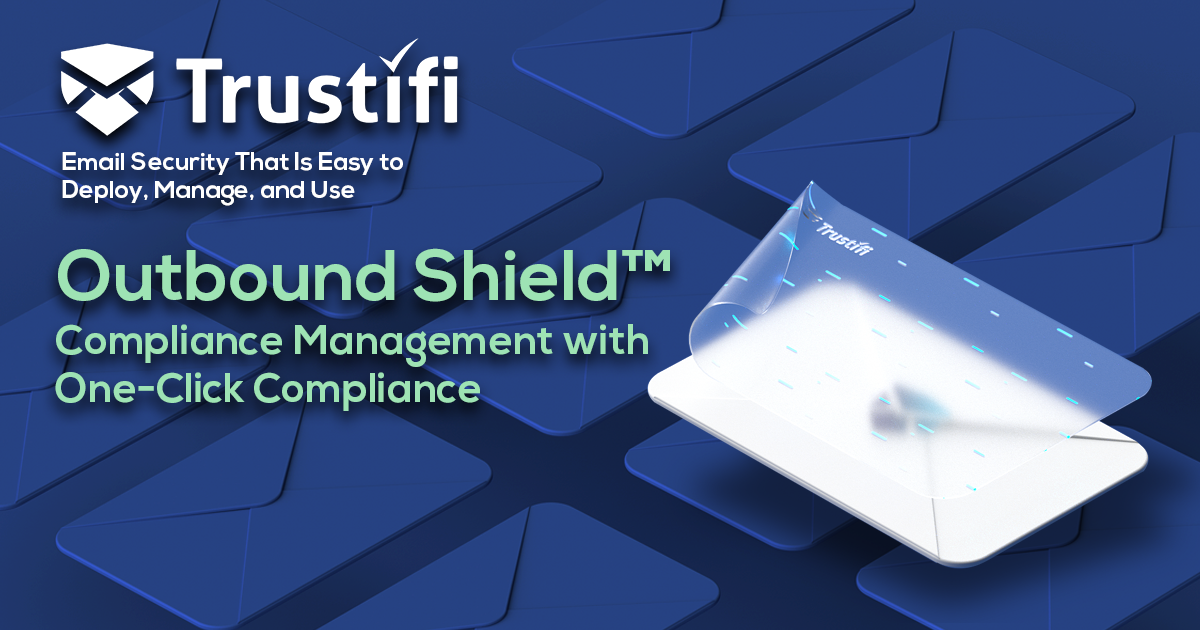
Trustifi One-Click Compliance makes enterprise-grade data security incredibly simple and accessible. With a single click, you can automatically enforce policies for over 10 strict regulatory mandates, including HIPAA, GDPR, and PCI, without complicating your existing Microsoft 365 or Google Workspace setups.
This powerful platform completely removes user friction by offering patented one-click encryption, real-time monitoring, and proactive data loss prevention to seamlessly reduce your compliance risk without slowing down your daily communications.
|
Trustifi One-Click E-mail Compliance |
 |
|
|
★★★★★ 5.0 out of 5 |
How To Compare Solutions For Your Organization
Bridging the gap between feature checklists and organizational fit requires a highly structured approach. Consider how specific user interfaces directly affect your team’s daily productivity.
Complex administrator dashboards often lead to severe fatigue, causing crucial security alerts to be overlooked. A truly effective solution provides intuitive reporting that stakeholders across legal, HR, and IT can easily interpret.
Use these critical comparison dimensions to guide your final decision-making process. Assess the vendor’s technology roadmap to ensure they consistently update their platform against emerging cyber threats.
Finding the right functional balance ensures long-term operational success and compliance stability.
- Start with your regulatory map: List every regulation your organization must comply with to ensure exact legal requirements are met.
- Evaluate the deployment model: Cloud native SaaS platforms deploy significantly faster and scale more predictably.
- Test customization depth: Determine if policy rules and email tracking are easily customized internally without extra configuration fees.
- Request real audit samples: Ask for actual compliance report exports to verify they satisfy strict auditor requirements.
- Calculate total cost: Factor in implementation time, training overhead, and ongoing administrative management expenses.
What Are Common Pitfalls To Avoid?
Protect your organization by actively anticipating issues before you lock into a software solution. Legacy systems often struggle to index massive attachments, slowing down discovery requests during critical legal investigations.
You must also consider the hidden costs of data retrieval fees that some vendors bury in their service agreements. Careful early planning prevents costly administrative headaches later down the road.
- Choosing painful deployments: If implementation requires weeks of professional services, your enterprise rollout is highly risky.
- Rigid policy engines: A solution locked into fixed rules or basic malware protection will leave your organization exposed during regulatory updates.
- Poor workflow integration: Usability directly determines your coverage level since employees easily bypass frustrating tools.
- Underestimating archiving needs: Not every solution meets industry-specific retention timelines or produces legally required formats.
- Ignoring scalability: A platform must perform just as well at 500 users as it does at 50 without unexpected price spikes.
| Warning/Important: Complex installations that demand extensive DNS modifications or third-party consultants frequently result in stalled projects. Opt for cloud-native architectures that connect seamlessly with your existing infrastructure. |
How Trustifi Automates Email Compliance For You
Trustifi stands out as a unified SaaS platform delivering inbound threat protection and streamlined compliance automation.
This consolidated approach perfectly aligns with the crucial enterprise buyer criteria outlined previously. It provides comprehensive email security capabilities in a single deployment.
- On policy enforcement: AI-powered rules adapt continuously without requiring manual intervention or oversight.
- On deployment: The platform deploys directly into modern workspaces, keeping your existing internal infrastructure intact.
- On encryption: True one-click tools allow users to effortlessly secure messages without frustrating portal logins.
- On regulatory coverage: Trustifi delivers out-of-the-box compliance archiving and deep support for major legal frameworks.
- On inbound threats: Advanced internal scanning tools actively stop external attacks from reaching employee inboxes.
Trustifi completely bypasses common industry software pitfalls with incredibly fast deployment and seamless workflow integration. The scalable platform architecture secures sensitive internal networks continuously against shifting modern threats. It also provides reliable message monitoring, so you always know when critical communications are properly opened.
This streamlined software architecture is heavily designed to power your corporate compliance efforts effortlessly. You gain an additional protective layer of enterprise-grade technology that strictly safeguards your sensitive information.
Every single feature is built to intelligently optimize daily communication rather than hinder it.
Choose The Best Compliance Solution
Automated organizational compliance is not a future investment; it is an active business necessity today. You must meticulously map your regulatory requirements first and evaluate solutions proactively. This exact approach directly reduces your business’s exposure to catastrophic and highly public data breaches.
Establishing a resilient compliance posture requires forward-thinking technology rather than reactive system patching. Avoid the hidden implementation traps that severely compromise data coverage across your organization. Select a sophisticated platform purposely built to scale seamlessly alongside your rapidly growing business.
By selecting an intuitive, automated platform, you empower your workforce to focus on high-value tasks instead of navigating bureaucratic security hurdles.
The right software investment today safeguards your intellectual property, preserves client confidentiality, and guarantees long-term operational continuity. You can easily automate your compliance from day one without disrupting daily communications.