Introduction
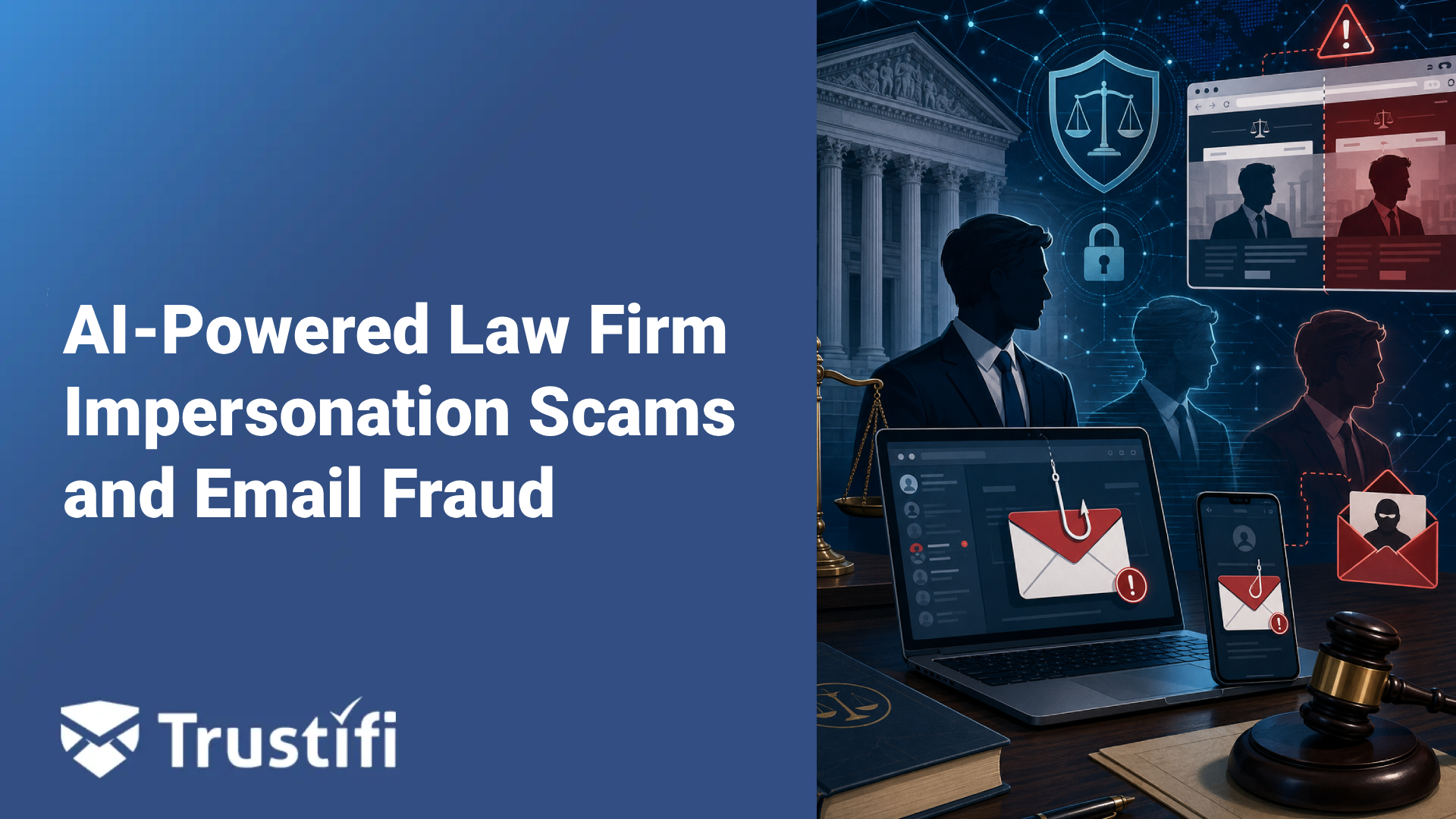
Business Email Compromise (BEC) is not a generic phishing problem, it is targeted fraud that exploits trust, timing, and routine. In law firms, it often lands right where pressure is highest, during closings, settlement disbursements, and trust account activity. The good news is you can reduce risk quickly with the right mix of policy, verification, and layered technical controls.What Business Email Compromise looks like in legal transactions
BEC in a legal context usually looks like a “normal” email thread that suddenly includes a small but critical change. The message may request updated wire instructions, a new payee, or a last-minute routing number fix, and it is designed to blend into the pace of a deal. Attackers rely on your team being busy and trying to keep the matter moving.Why law firms are prime targets
Law firms move money on behalf of clients, often through escrow, settlement, and trust accounts. They also sit at the center of high value communications between buyers, sellers, lenders, title companies, and opposing counsel. That combination of money movement and multi-party email threads makes firms attractive to both cybercriminals and opportunistic fraud rings.What is at stake
The impact is bigger than a single misdirected wire. Client funds can be lost, privileged communications can be exposed, and your firm can face malpractice exposure and reputational damage. Even near-misses create operational drag, including investigations, client reassurance, and changes to internal procedures.Common Risks and Challenges
BEC succeeds when small weaknesses stack together, especially in fast-moving transactions. These are the patterns that show up most often in law firm workflows.Lookalike domains and attorney name impersonation
Attackers register domains that look nearly identical to a real firm, client, or vendor domain. They may also spoof display names so the message “looks right” at a glance on mobile. If your team is scanning quickly, a single character difference can be enough to trigger a costly decision.Compromised mailbox takeover, inbox rules, auto-forwarding, hidden deletions
When an attacker gets access to a mailbox, they may create forwarding rules to monitor deal communications in real time. They can also hide alerts by deleting messages or moving them into obscure folders. The goal is simple, stay invisible while they wait for the best moment to strike.Last-minute updated wire instructions and payment diversion scams
This is the classic closing-day trap. A message arrives with urgency, a “new account,” or a “bank cut-off” excuse, and it pushes your team to bypass verification. Once the money is sent, recovery can be difficult, so prevention and rapid response matter.Client impersonation during real estate closings and settlement disbursements
Fraudsters may impersonate a buyer, seller, or claimant and attempt to redirect proceeds. They often use details pulled from prior emails, public records, or compromised accounts to sound credible. Any workflow that accepts payment instructions through email alone is at higher risk.Vendor, title company, lender, or opposing counsel email compromise
Even if your firm is locked down, the thread can be compromised on the other side. Attackers frequently pivot through vendors because they know law firms will treat familiar counterparties as trusted. That makes verification steps and clear policies even more important across parties.Weak identity checks for new payees and bank detail changes
If your process does not require documented verification for changes, attackers will aim right there. “New payee” and “changed bank details” should be treated as high-risk events. Strong controls make fraud harder because the attacker cannot win with email alone.Overreliance on email threads for approvals and funding authorization
Email is great for coordination, but it is a weak channel for authorization. Attackers can insert themselves into threads, reply from compromised accounts, or quote past messages to appear legitimate. Your approval path should not depend on the integrity of a single thread.Poor trust account controls, single-person initiation and release
When one person can both initiate and release a wire, a single compromised mailbox or a single mistake can move funds. Separation of duties reduces the chance that a forged message becomes a completed transfer. It also makes anomalies easier to spot before money leaves the account.Mobile access risks, public Wi-Fi, unmanaged devices, session hijacking
Deal work happens everywhere, including phones and laptops outside the office. Public networks and unmanaged devices increase exposure to credential theft and session capture. If attackers can hijack access, they can watch threads, time their requests, and mimic real participants.Best Practices for Preventing BEC in Legal Transactions
The strongest BEC defense in a law firm is procedural, not just technical. You want predictable rules that hold up under urgency, plus tools that reduce human error.Build a no changes by email policy for wire instructions and payee updates
Make it a firm-wide rule that wire instructions and payee changes cannot be accepted through email. Put the policy in your engagement letters, closing checklists, and standard client communications. When everyone expects the rule, attackers lose leverage because urgency does not override process.Use out-of-band verification with a call-back to a known number
Verify requests using a phone number you already have on file, not a number included in the email. If the request is legitimate, the other party will understand, especially given the prevalence of wire fraud. Document who verified, when, and what information was confirmed.Verify at two points, intake and pre-funding
Perform an initial verification when bank details are first received, then verify again immediately before funds move. The second verification is critical because attackers often wait until the last moment, when teams are racing the clock. Treat time-critical closings as higher risk, not as a reason to skip steps.Require dual approval for trust, escrow, and settlement disbursements
Use a two-person rule for initiating and releasing disbursements, with clear roles and a required review of verification notes. Dual approval should include checking the originating request, the verified bank details, and any recent changes. This control is especially important for high dollar transfers and new payees.Standardize wire instruction templates and lock down who can send them
Create approved templates for how your firm provides wire instructions, including warnings and verification steps. Limit who can send these templates, and require secure delivery for sensitive details. Consistency reduces confusion and makes suspicious deviations stand out.Confirm bank details with documented steps, including beneficiary name matching
Go beyond routing and account numbers, confirm the beneficiary name matches the intended recipient. If the bank or title company can validate the beneficiary, record it. Keep a simple verification log so your team can prove what happened if questions arise later.Train staff on legal-transaction red flags
Train partners, associates, paralegals, and accounting teams on common fraud signals, including urgency, secrecy, new account today claims, and last-minute changes. Use examples from real matters, with anonymized screenshots of suspicious patterns. Short, frequent refreshers tend to stick better than annual training alone.Monitor mailbox rules, forwarding, and suspicious login alerts
Make mailbox rule review part of your security routine. Look for auto-forwarding, unusual inbox rules, and repeated failed logins. If you can catch an account takeover early, you may prevent the attacker from reaching the funds-moving stage.Maintain an incident playbook for wire fraud response
Define exactly what happens when fraud is suspected, including who calls the bank, what information is needed for a recall request, and who notifies the client. Include steps for preserving evidence, reviewing affected threads, and reporting to relevant authorities (for example, IC3 in the United States). The faster you act, the better your chances of limiting loss.Run tabletop exercises for wire fraud scenarios
Practice a closing-day wire change scenario with your team, including attorneys, finance, and IT. Tabletop drills reveal gaps, like missing call-back numbers, unclear approval authority, or delayed escalation. After each exercise, update checklists and templates so the process improves over time.Recommended Security Features
Policies and verification reduce risk, and security controls help you scale those protections across busy teams. These features are especially relevant for legal transactions where email is the coordination hub.Anti-impersonation and BEC detection tuned for legal and finance workflows
Look for controls that flag impersonation, suspicious reply patterns, and wire-change language commonly used in fraud. Alerts should be actionable and easy for staff to understand, not just a technical warning. The goal is to stop the message before it reaches the point of decision.SPF, DKIM, and DMARC enforcement
These email authentication standards help reduce spoofing and domain abuse. When properly configured, they make it harder for attackers to send convincing messages that appear to come from your domain. They also improve your ability to see, investigate, and block impersonation attempts.Strong MFA with phishing-resistant options and conditional access
Multi-factor authentication reduces mailbox takeover risk, and phishing-resistant options raise the bar further. Conditional access policies can limit risky logins, such as impossible travel or unknown devices. Combined, these controls reduce the chance that an attacker can sit inside a thread.Secure email encryption and protected message portals
The ability to encrypt email protects attorney-client communications and sensitive documents in transit. A protected delivery experience can also reduce accidental forwarding and limit access to intended recipients. This is especially useful for wire instructions, settlement statements, and privileged attachments.Attachment and URL scanning with time-of-click protection
Many BEC campaigns start with credential theft via links or malicious attachments. Scanning, sandboxing, and time-of-click checks reduce the chance that a single click becomes a compromised mailbox. This is a critical layer for staff who process large volumes of email under deadline.DLP policies for wire details, tax IDs, and privileged documents
Data loss prevention (DLP) can detect sensitive patterns like account numbers and tax identifiers before messages leave the firm. It can also prompt for encryption or block high-risk outbound sends. This reduces both fraud exposure and accidental disclosure risk.Domain monitoring and external sender labeling
External sender labels help staff recognize messages that are not from inside the firm. Domain monitoring can help you spot lookalike registrations and abuse early. Together, these controls reduce the success rate of subtle impersonation tricks.Centralized audit logs, alerting, and anomaly detection
Visibility matters during investigations, especially when you need to understand who accessed a mailbox and what rules changed. Centralized logs and alerts speed triage and reduce guesswork. Better visibility also supports compliance and internal reporting needs.Role-based access controls for trust account communications and approvals
Limit access to trust-account-related mailboxes, templates, and approval paths to only the staff who need them. Use clear role separation so initiation and release are not handled by a single account. This reduces both insider risk and the blast radius of a compromised mailbox.How Trustifi Supports Preventing BEC in Legal Transactions
Trustifi can support a layered defense by helping protect email identity, detect threats, and secure sensitive communications. In legal transactions, the practical value is reducing the chance that a fraudulent message reaches decision makers, and making it safer to share sensitive information when email is unavoidable.Stops spoofing and impersonation attempts targeting partners, associates, and staff
Trustifi helps reduce spoofing and impersonation risk by strengthening email security controls around suspicious senders and message patterns. This matters most for high-trust roles like partners, executive assistants, and accounting teams. When impersonation is blocked or clearly flagged, your team has more time to verify instead of react.Detects BEC patterns, wire change requests, and anomalous behavior
BEC defenses are most effective when they focus on how fraud actually presents in email, including last-minute changes and social engineering cues. Trustifi can help surface suspicious requests so staff can pause and follow your call-back procedure. Pair this with a documented verification workflow for the strongest results.Protects attorney-client communications with encryption and secure delivery
For privileged messages and sensitive documents, Trustifi provides encryption and secure delivery options designed to protect content beyond basic transport. This supports safer sharing of settlement documents, IDs, and financial details. It also helps you standardize when and how sensitive information is sent.Reduces phishing-driven mailbox takeovers with threat detection
Many transaction-focused fraud attempts begin with credential theft. Trustifi can help identify and block malicious messages that try to capture logins or deploy malware. Fewer successful takeovers means fewer attackers sitting quietly inside your deal threads.Applies DLP controls to prevent accidental exposure of wire details and client data
Even without fraud, misdirected emails and incorrect attachments can create serious risk. Trustifi can help apply policy-driven controls to sensitive information, including prompts or protections when certain data types appear. That reduces reliance on individual users remembering the “right” way to send.Supports confidentiality-focused controls for case materials
Legal work often involves documents that should not travel freely across inboxes. Trustifi can help you apply consistent security to sensitive case materials so communication stays aligned with your confidentiality expectations. This is especially useful when collaborating across multiple parties and organizations.Provides visibility, logging, and alerting to speed investigation and response
When something looks wrong, speed and evidence matter. Trustifi can support investigation with visibility into threats and security events, helping your team respond faster and more confidently. Combine this with your incident playbook so responsibilities and escalation paths are clear.Conclusion
Stopping BEC in law firm transactions is a process that blends policy, people, and layered controls. The most important move is making verification non-negotiable for any funds-moving change. From there, security features and tools can help you enforce your rules consistently, even during urgent closings. If you do three things this week, start here:- Enforce a no changes by email rule for wire and payee updates, and communicate it to clients and counterparties.
- Require out-of-band verification using known contact information, and document each verification.
- Layer technical controls (impersonation protection, MFA, encryption, and DLP) to reduce both fraud and accidental exposure.


Protect Every Closing and Disbursement
Lock down wire instructions and settlement communications with a verification-first process, plus Trustifi’s email security, encryption, and BEC-focused protections that help reduce impersonation, phishing, and data exposure in legal transactions.